Life by design
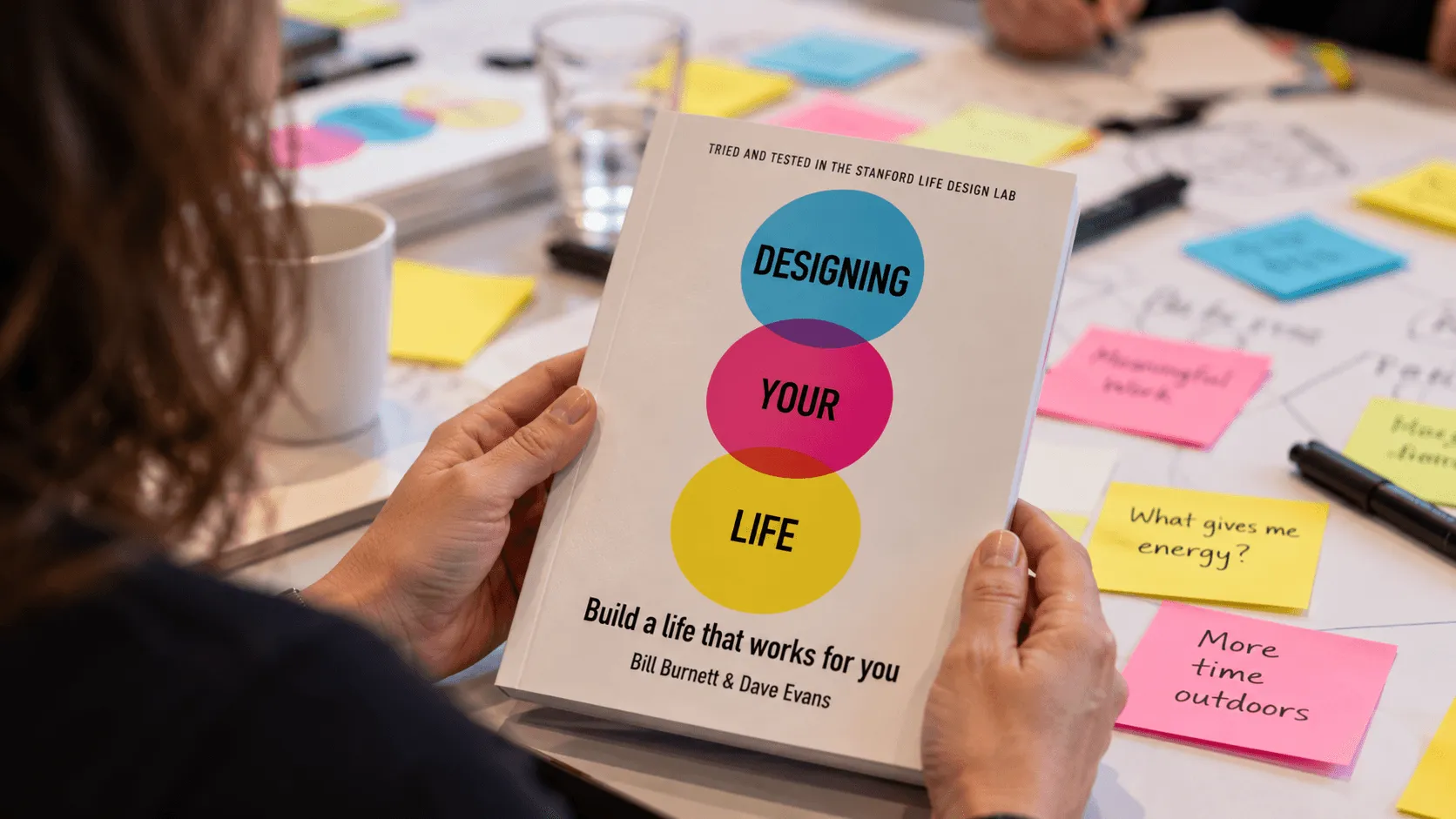
In a Future of Work course at Masaryk University, I used the methods from Burnett and Evans’ Designing Your Life on my own week. The question was simple: why do I live reactively instead of intentionally?
Category:
Design Thinking
Author:
Pavel Danyi
Read:
3 mins
Location:
Prague
Date:
Jul 21, 2025
Baseline: the Life Dashboard
Where the method comes from
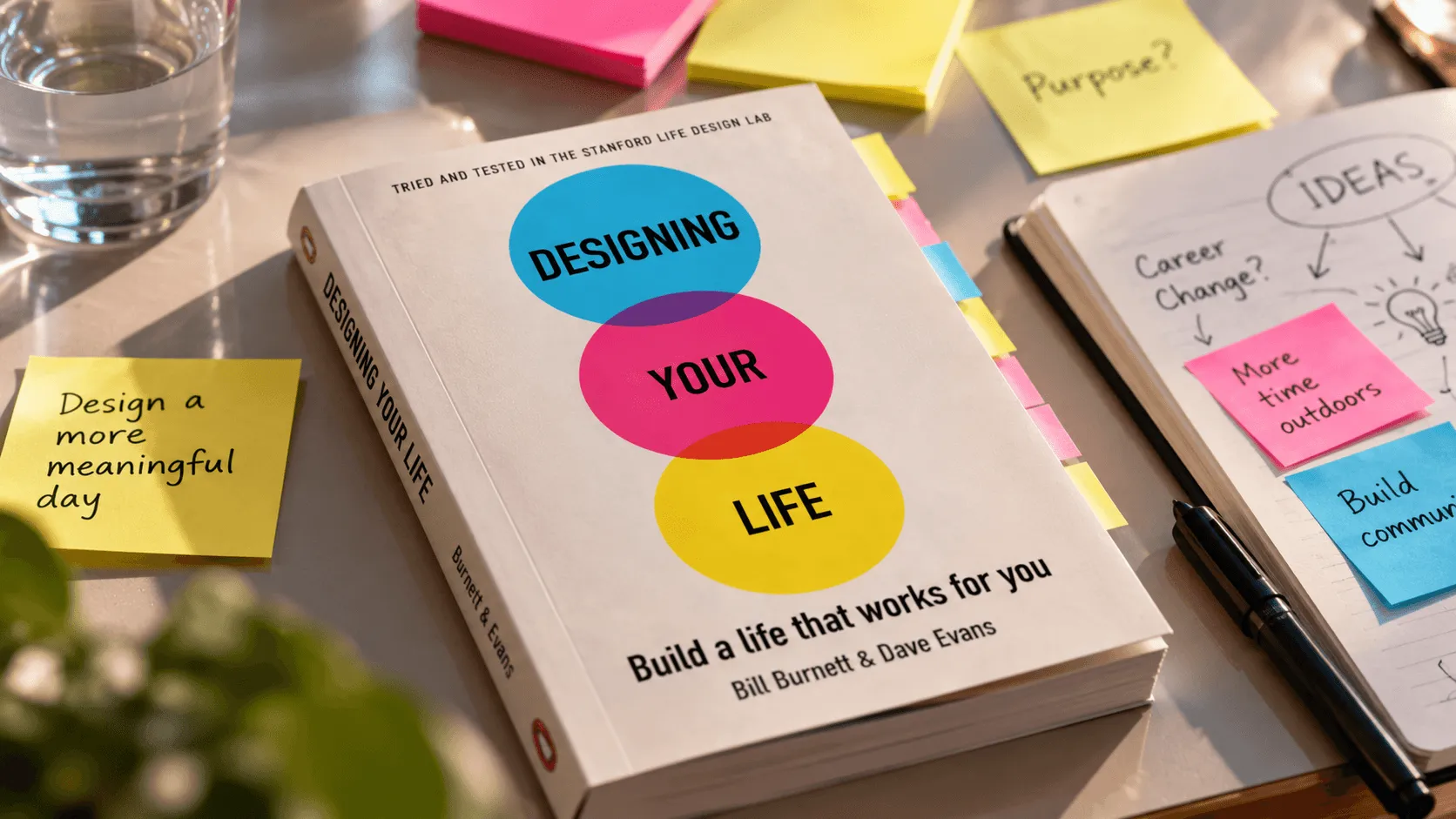
Bill Burnett and Dave Evans teach Designing Your Life at Stanford and turned the course into a book in 2016. The premise is that you can’t think your way to a good life, you have to build your way there. So the tools are the ones designers use on products: look at the current state honestly, reframe the problem, generate more than one option, prototype cheaply and talk to people.
The first tool is a dashboard. You rate four areas, Health, Work, Play and Love, from 0 to 10. It isn’t a measurement. It’s a way to see where you actually are before you start changing anything.
My scores
Work got 8: I like UX, but it spills into everything else.
Play got 5: portfolio, side projects and walks kept moving to “later”.
Health got 5: I knew what to do and didn’t do it.
Love got 4: mostly online contact, nothing being built.
The scores aren’t scientific. They showed where I actually was, not where I thought I was. And once they were on paper, the pattern was hard to miss: one area at 8 was being paid for by the other three.
Work view, life view and the Good Time Journal
Two short texts
The next step is to write two short texts, one about what work is for and one about what life is for, and then read them side by side to see whether they agree.
I wrote one short text about work and one about life. Work is best for me when it helps someone. Life needs time with no output attached. When work dominates, the rest narrows. The conflict wasn’t between two values. It was between a value and a habit.
The Good Time Journal
For almost three weeks I logged my activities by engagement and energy: how absorbed I was, and whether the activity gave me energy or took it away.
Morning drawing and deep research blocks gave me energy. Email triage and organisational friction took it away.
It’s the same move as a diary study in user research: stop trusting what people say they do and look at what they actually do over time. This time I was the participant, and I was as unreliable a narrator as anyone.
I now plan my weeks around that: more of the first, and the second batched.
Odyssey plans and what changed
Three lives, five years each
Odyssey plans ask for three genuinely different five-year futures, not one plan and two backups. In the book, one is the life you’re already heading towards, one is what you would do if that option disappeared, and one is what you would do if money and other people’s opinions didn’t matter.
I wrote three five-year plans: remote UX work in Australia with time for writing and drawing, a PhD and teaching service design in Czechia, and leading a design team in an international company.
Prototype conversations
Instead of choosing straight away, you prototype. The cheapest prototype of a life is a conversation with someone already living a version of it. I talked to people living something close to each plan: a designer on international projects, an anthropologist doing fieldwork, and an actor.
What changed
Design and research stayed at the centre. What changed was the setting I want them in: more autonomy, more time to reflect, more work across cultures.
The bigger lesson was about method. These are tools I use on products, and pointed at my own week they worked the same way: the dashboard showed the gap, the journal replaced opinion with evidence, and the conversations tested assumptions faster than any amount of thinking would have.
Sources
Burnett, B. & Evans, D. (2016). Designing Your Life: How to Build a Well-Lived, Joyful Life. Knopf.
Burnett, B. & Evans, D. The Designing Your Life Workbook. Penguin Random House.
© More articles
(Notes)
Creative notes
© help centre
(WDX)
clarification








Let’s talk