Tangible evidence
I used AI to design a fake product from 2050: a pillow that simulates a deceased child’s heartbeat. By creating realistic IKEA-style ads and marketplace listings, I forced doctors to confront uncomfortable ethical dilemmas.
Category:
Speculative Design
Author:
Pavel Danyi
Read:
4 mins
Location:
DaNang
Date:
May 21, 2024
What is speculative design?
Most design work answers a question someone has already asked. Speculative design asks the question first. Anthony Dunne and Fiona Raby, who shaped the field at the Royal College of Art, describe it in Speculative Everything (2013) as using design to ask “what if”, and to open a debate about which futures we actually want, instead of trying to forecast them.
My task was to apply speculative design, not to predict the future, but to materialise one possible scenario so that people could discuss it before it happens.
A map of futures
Futurists often draw this as a cone. In Joseph Voros’s futures cone, probable futures follow current trends, plausible ones could happen given how the world works, possible ones might happen with knowledge we don’t have yet, and preferable futures are a value judgement laid over all of them. Speculative design lives mostly in the plausible zone: far enough out to be uncomfortable, close enough that you can’t wave it away.
The brief: grief as a product
Roman Sellner and Natálie Káčová gave me a scenario set in 2050, where grief tech is a common commodity. It is less distant than it sounds. In June 2022 Amazon showed an Alexa feature in development that read a bedtime story to a child in the voice of the child’s late grandmother, built from less than a minute of recorded speech. It never launched, but the demo was real, and so was the debate about consent that followed.
In the same year, both major diagnostic manuals, ICD-11 and DSM-5-TR, included prolonged grief disorder: grief that stays intense and disabling long after a loss. A product that promises comfort could, for some people, be the thing that keeps the wound open. That tension was the material I wanted to work with.
PulseNest
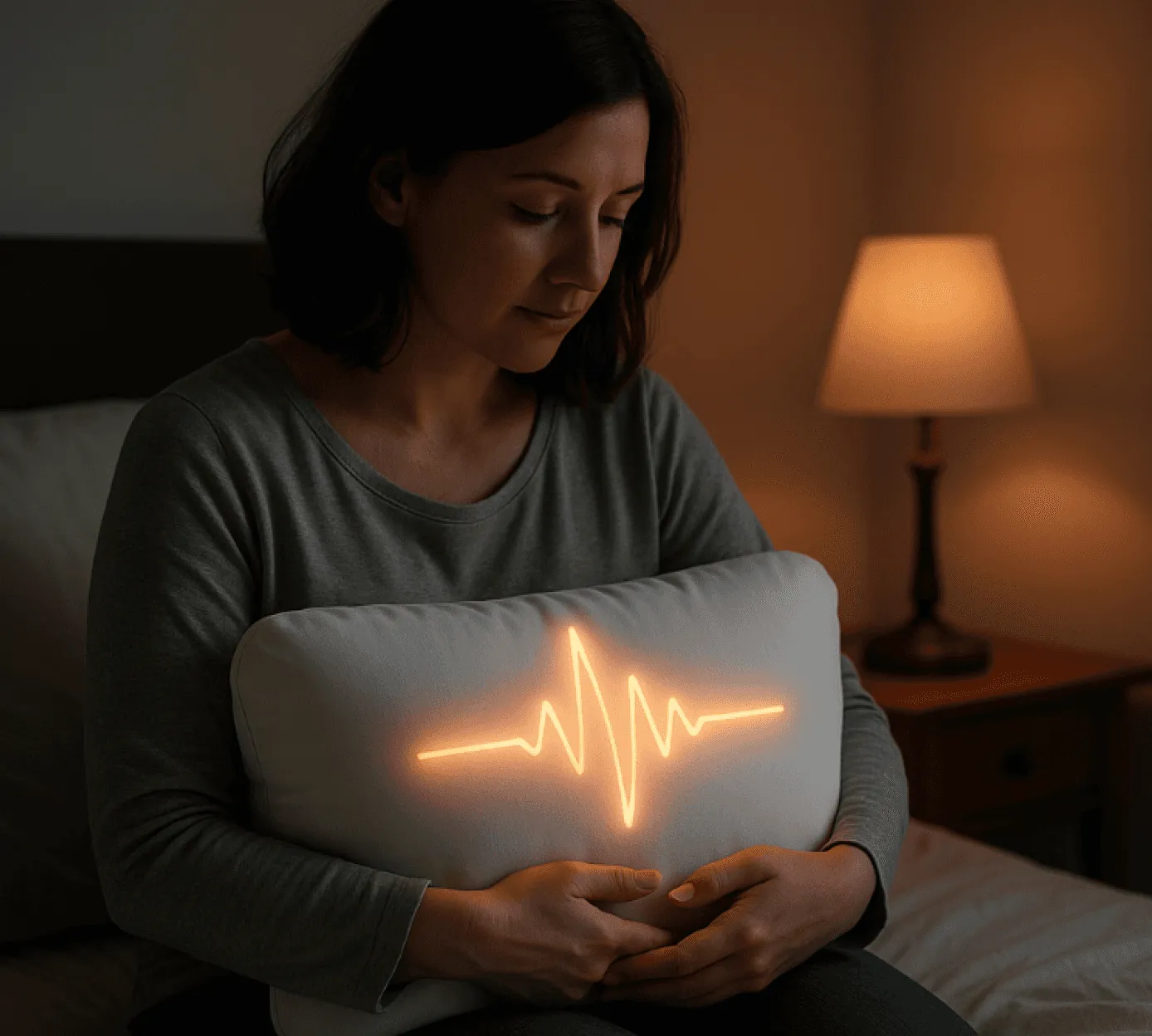
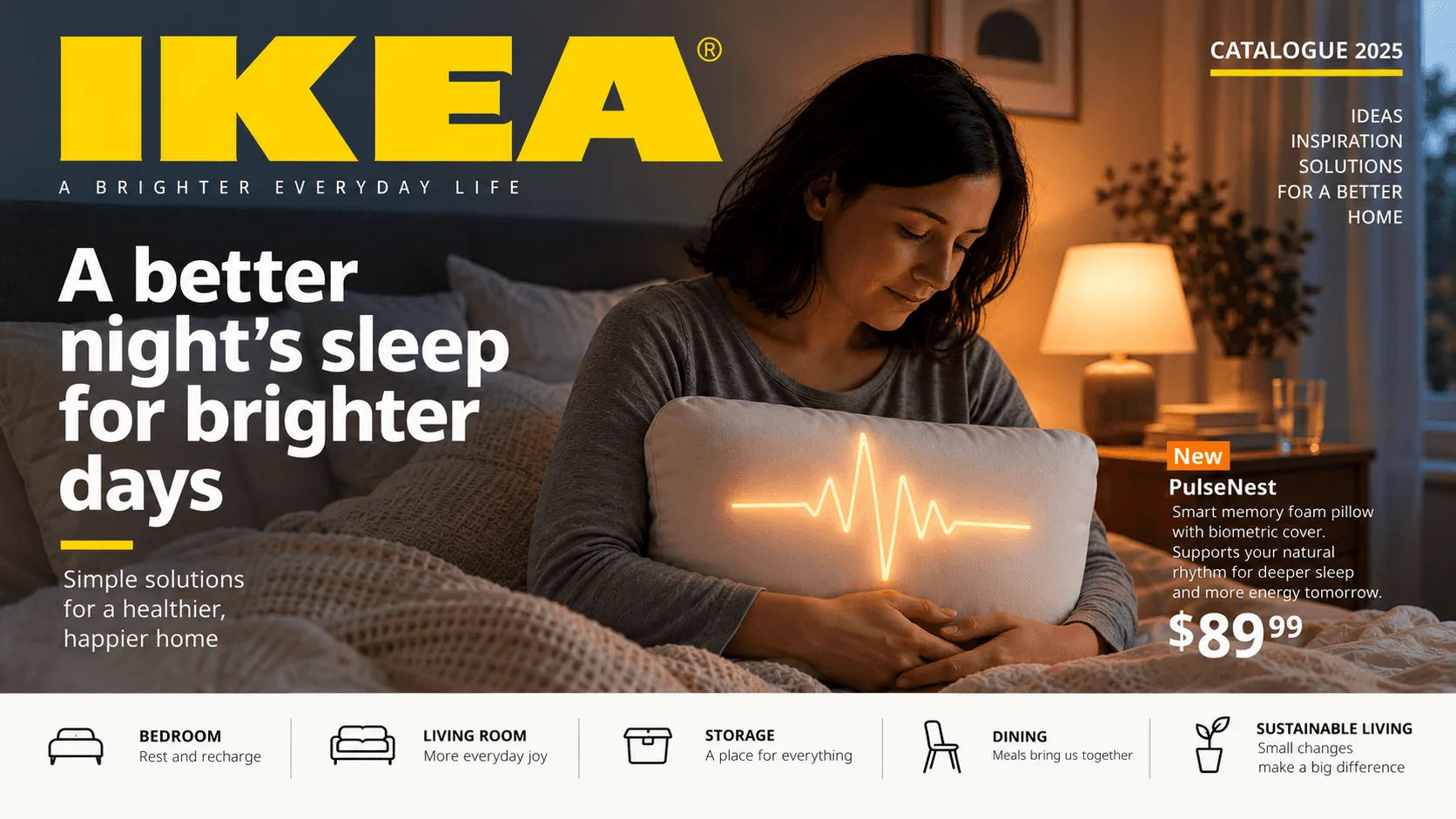
I built PulseNest, a pillow that plays back the heartbeat of a child who has died. Instead of one hero image, I showed its full life cycle: how it’s sold, reported and eventually discarded. Each stage is a separate artifact, in a format people already know from their own lives.
Phase 1, the catalog. PulseNest sits inside a department store catalog aesthetic, priced at £990, turning grief into a shopping cart item.
Phase 2, the news. A fictional 2050 news article normalises the technology in public debate.
Phase 3, the marketplace. A Facebook Marketplace ad sells the pillow once it’s no longer needed, colliding grief with consumerism. This is where the hardest questions surface: what happens to a child’s heartbeat when the object is resold, and who decides that someone no longer needs it?
Why banal works
The power of speculative design lies in its banality. Artifacts that look like your morning news feed are harder to dismiss than sci-fi props, and that’s where the unease sets in. A glossy concept render invites you to judge the design. A catalog page with a price tag invites you to imagine buying it.
The impact
Working remotely, I doubted whether pixels alone could carry weight. These were flat images, not objects anyone could hold.
Then I heard psychotherapist Kateřina Hájková Klíčová describe participants’ reactions on the podcast Ministerský jednorožec:
“I see terror in your eyes.”
Healthcare professionals didn’t react to the aesthetics, they reacted to how available this technology felt. Their first response was rejection, and that was the goal.
Rejection as a result
In product work, a negative reaction usually means something failed. Here it was the outcome the artifacts were made for. They worked as a safe simulator for a dilemma that’s coming: people could feel where their own limits are and argue about them while nothing was at stake yet.
The questions they open, about consent, about what healthy grieving looks like, and about who profits from loss, are the same questions a team building real grief tech would have to answer. Better before launch than after.
Conclusion
This project, opened up by my studies at KISK, confirmed that design doesn’t only solve problems, it can open them.
What I take from it into everyday product work:
Design the whole life cycle, not just the happy path. The marketplace ad said more than the catalog, because the end of a product’s life is where its values show.
Make it look ordinary. People judge a familiar format by its content and an unusual one by its style.
Let the artifact do the talking. Nobody needed a slide about grief tech to react. A price tag was enough.
I’m continuing the work with Roman Sellner and Natálie Káčová.
Sources
Dunne, A. & Raby, F. (2013). Speculative Everything: Design, Fiction, and Social Dreaming. MIT Press.
Voros, J. (2017). The Futures Cone, use and history. thevoroscope.com
Amazon re:MARS 2022 Alexa voice demo, reported by The Boston Globe, 4 July 2022.
Eisma, M. C. (2023). Prolonged grief disorder in ICD-11 and DSM-5-TR: Challenges and controversies. PubMed Central, PMC10291380.
© More articles
(Notes)
Creative notes

© help centre
(WDX)
clarification









Let’s talk